The Story of Georgia's Waterways

Georgia Map

2026 Rivers Alive Theme

This year, we look back to move forward. Created with guidance from the Georgia Council on American Indian Concerns, the Rivers Alive 2026 theme honors the profound history of Georgia waters and the Indigenous people who have lived on and served the land for thousands of years. The stewardship of these people represents the heart of the Rivers Alive mission, to provide clean water for generations of Georgians to come.

Georgia Council on American Indian Concerns

The 2026 theme honors the enduring legacy of Georgia tribes by educating citizens on the native river names bestowed by the original stewards of these lands. These waterway descriptions were developed using reputable historical resources in guidance with the Georgia Council on American Indian Concerns.

Georgia's 14 Major River Basins

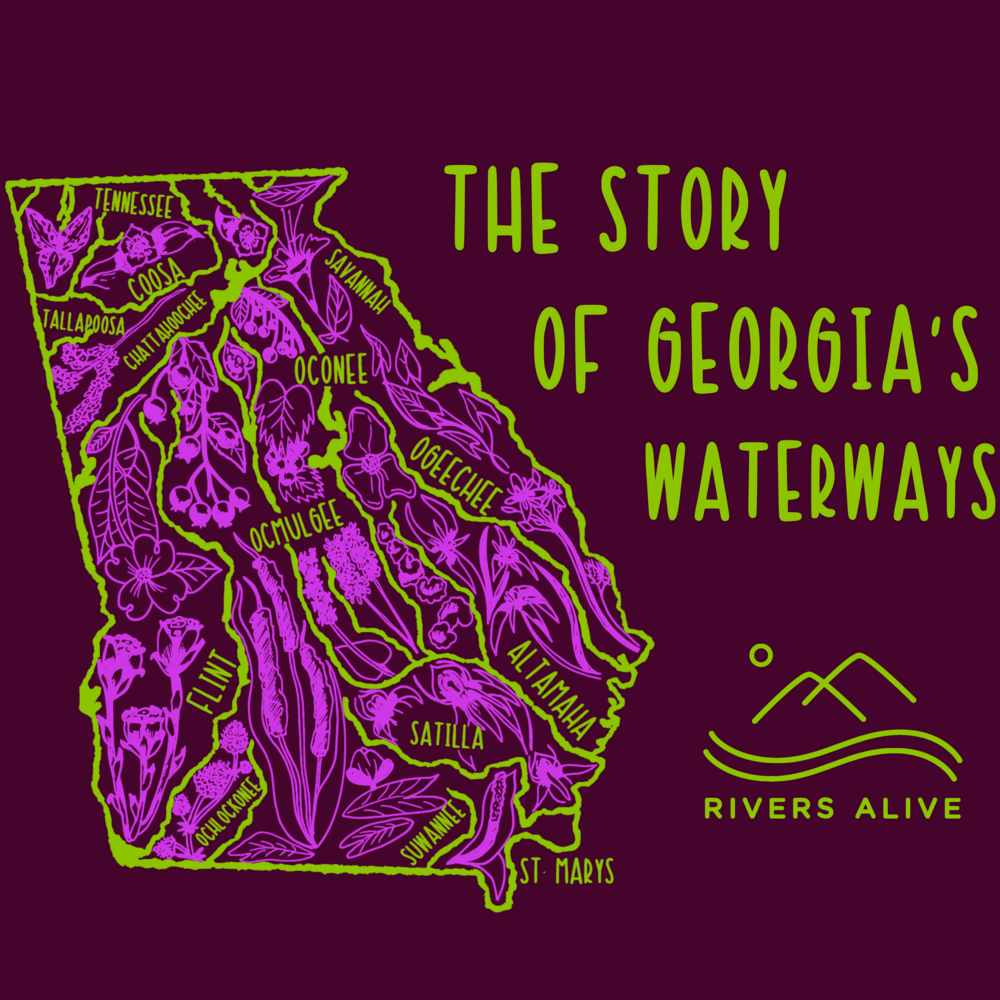
Georgia is home to more than 70,000 miles of rivers and streams organized into 14 major river basins, all draining into either the Atlantic Ocean or the Gulf. Long before European settlement, American Indian communities established vibrant cultures along these waterways. Rivers provided essential ecosystem services like clean drinking water, rich flora and fauna, fertile soil, and natural transportation routes, which deeply influenced Indigenous spiritual beliefs and cultural traditions.
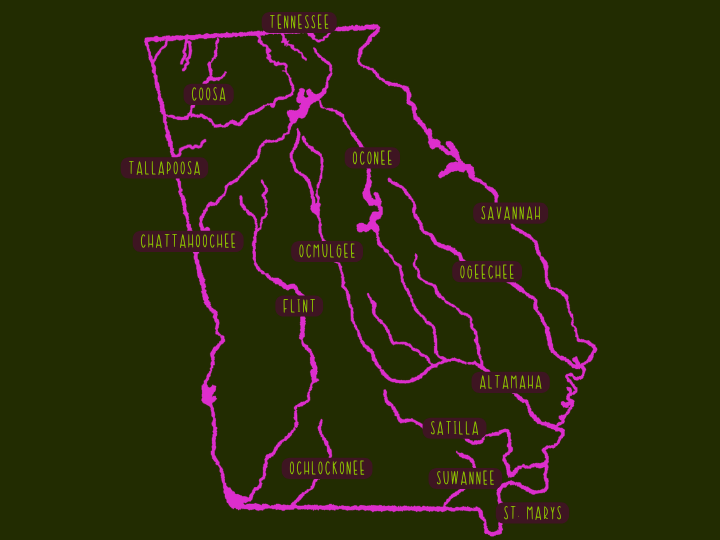
Georgia River Basins

Prior to the 1830s Georgia was home to diverse tribes, including the Apalachee, Cherokee, Hitchiti, Oconee, Miccosukee, Muscogee, Timucua, Yamasee, and Guale. Most were forcibly relocated west to reservations in present-day Oklahoma. While no federally recognized tribes remain within Georgia today, the state officially recognizes three: the Georgia Tribe of Eastern Cherokee, the Cherokee of Georgia Tribal Council, and the Lower Muskogee Creek Tribe.
Examining Native Toponyms

Altamaha River

Altamaha River

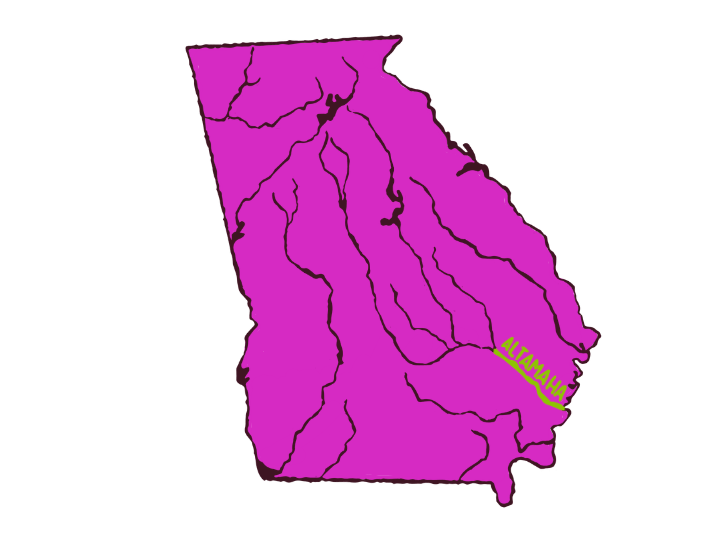
The Altamaha River derives its name not from a linguistic word, but from the Native American Altamaha Chiefdom. The Altamaha Chiefdom was once part of the paramount chiefdom known as Ocute and later called La Tama. The original meaning of the chiefdom's name has not been established. 

Chattahoochee River

Chattahoochee River

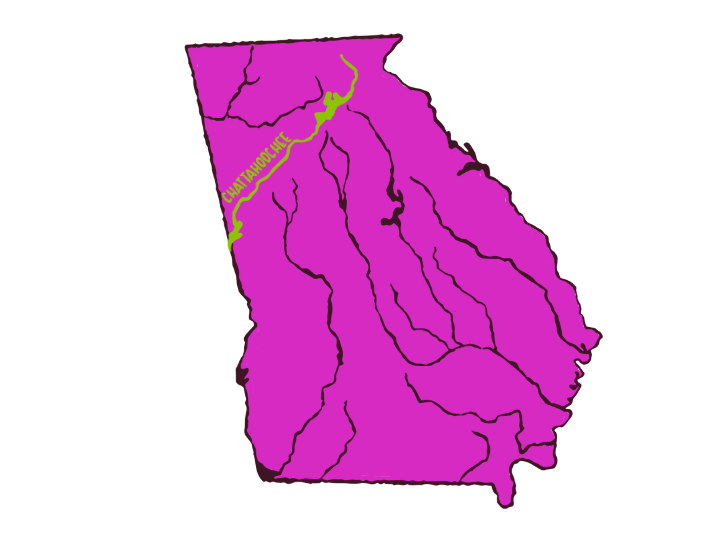
The Chattahoochee River has two sources of competing etymologies. In 1799, Indian agent Benjamin Hawkins recorded the Muscogee name for the river where chat-to meant "stone," and ho-che meant "marked" or "flowered." Another view suggests that in the Hitchiti language, the river was named Cata-hvci (pronounced Chata-hawchee), meaning "Red River" for the red clay geology of the region. 

Coosa River

Coosa River

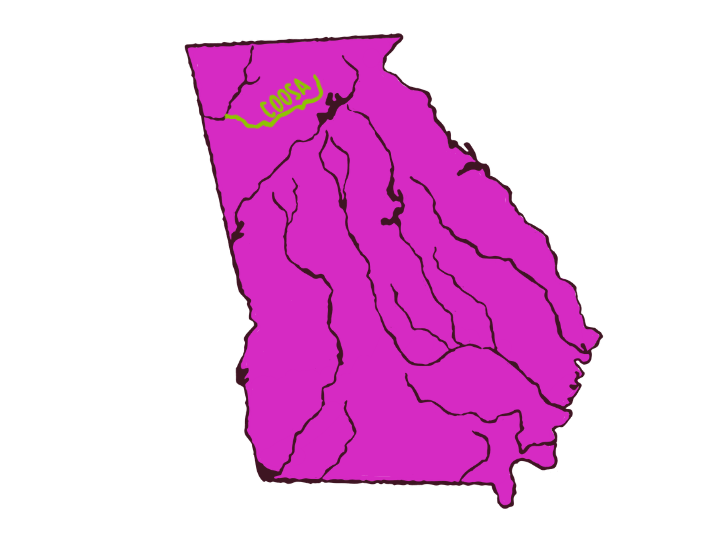
In the Cherokee language, the word Gu-sa means "Creek Indian," and likely derives from a Muskogean word for "river cane". 

Flint River

Flint River

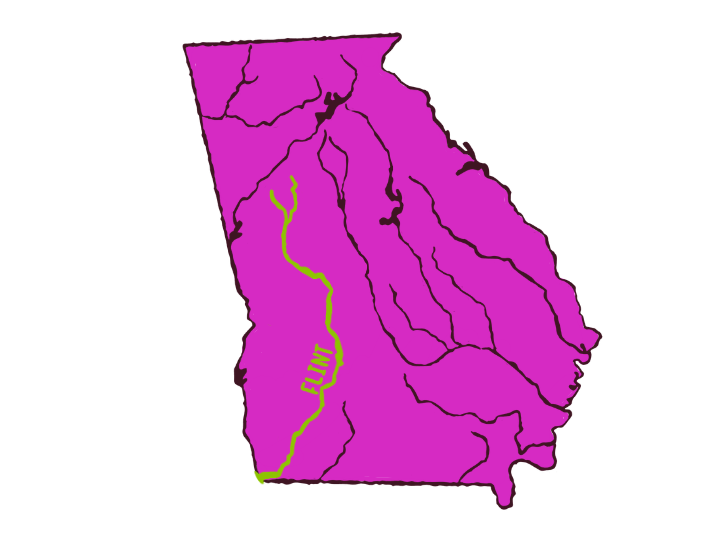
The Flint River has been called many different names by various groups, but they almost all have one thing in common: they reference the riverbed geology which consists mostly of flint. Ancient Eastern Woodland tribes referred to the river as Thronateeska or Thlonotiaske which means "flint picking-up place." The Muscogee, however, knew the river as Hlonotiskahachi, where hlonoto means "flint." In 1540, Hernando DeSoto discovered the river and named it Rio de Capachequi after the Native American chiefdom in the area. Spaniards later called it Rio Pedernales, after the Spanish word pedernal meaning "flint."

Ochlockonee River

Ochlockonee River

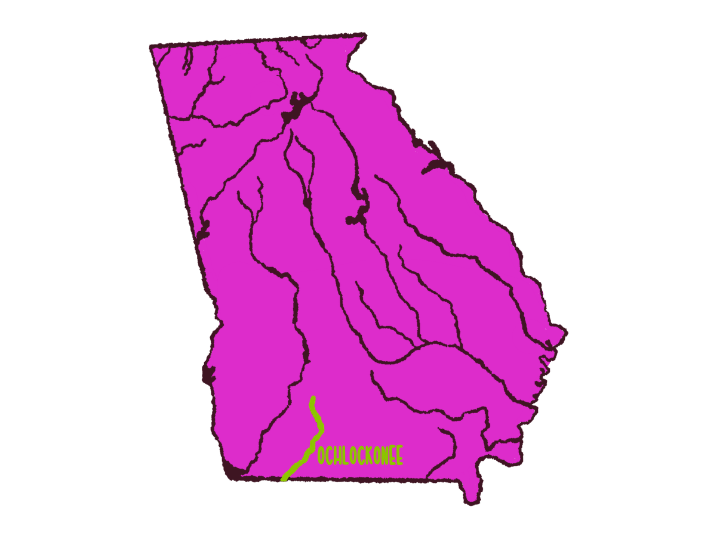
The name Ochlockonee comes a branch of the Muskogee language, Apalachee. The Appalachee referred to the river as Oki Lugni or Oki Lagana where Oki means "water" and Lagana or Lugni means "yellow." The Apalachee people called this river "yellow water" because as the red clay soil mixes with sandy colored clay, the water turns a distinct yellow-like color.

Ocmulgee River

Ocmulgee River

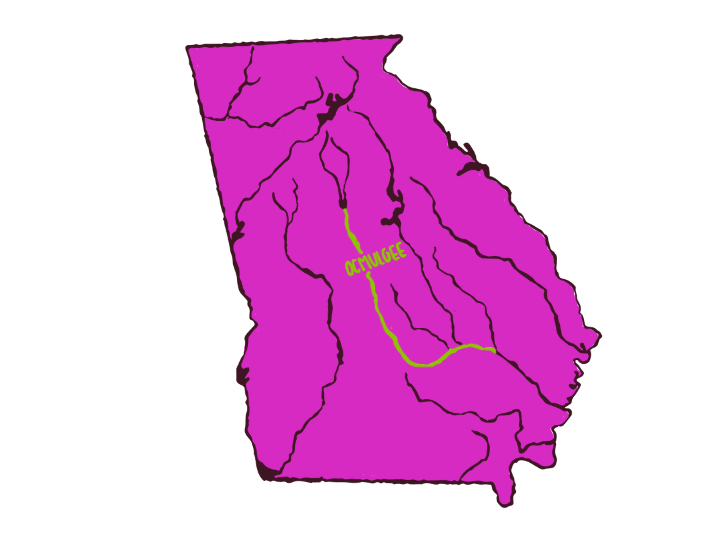
A name given by English traders for a Hitchiti-speaking tribe in the area, the Okmulgees. In Hitchiti, the word Okmulgee translates as "where the water boils up." This is most likely a reference to the nearby Indian Springs, where centuries of Creek Indians collected its water for its holistic, healing properties. To the Okmulgees, however, the river was called Ochese-hatchee or Ochese Creek, paving the path for English traders to refer to tribes of this area as the "Creek people," disregarding the name they called themselves, the "Muscogee."

Oconee River

Oconee River

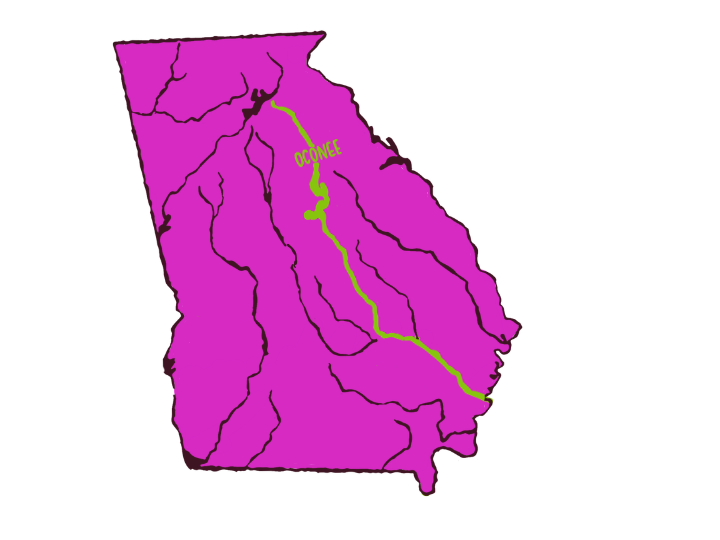
The name Oconee comes from a Hitchi-speaking tribal town, though no agreed-upon translation has been documented. The name Oconee has also been written as Aconnee, Ocone, and Oconi. These names were shared by a Timucua chiefdom in southeastern Georgia, an Apalachee town in northern Florida, and a Cherokee town in western South Carolina. 

Ogeechee River

Ogeechee River

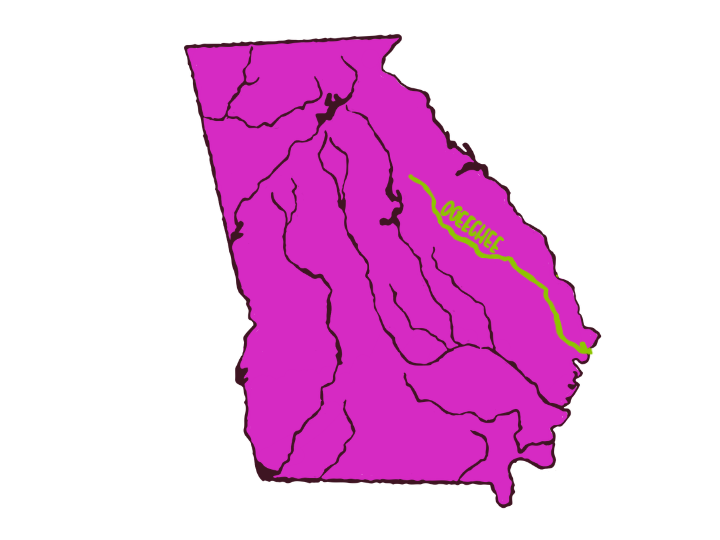
The etymology of the Ogeechee River is debated by various sources. The Muskogean Indians called the people in this region the Hughchee or Hogeechee tribe, in reference to the Uchean (Yuchi) tribe who were part of the Lower Creek Confederacy. However, a dissenting view holds that the name derives from the Hitchiti word Oksai, meaning "Children of the Water," a reference to the Yuchi Tribe's ties to the river basin. 

Satilla River

Satilla River

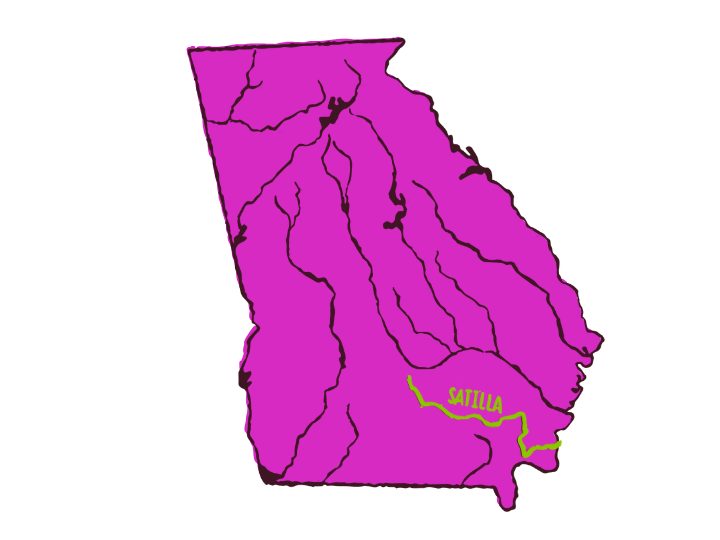
The Satilla River was once part of a transportation and trade network for the Muscogee Nation; however, its original name was lost to history, making it one of the few major river basins in Georgia that does not retain its Indigenous name. In the 1500s, French explorer Jean Ribault called the river Riviere Somme, named after a French waterway with similar tranquility. Later, during the Spanish exploration, a chain of missions was established along the southeastern coast of Georgia. The Spanish explorers named the river St. Illa, in memory of a late officer. After the Spanish were defeated, the English colonizers kept the name but anglicized it into its current pronunciation.

Savannah River

Savannah River

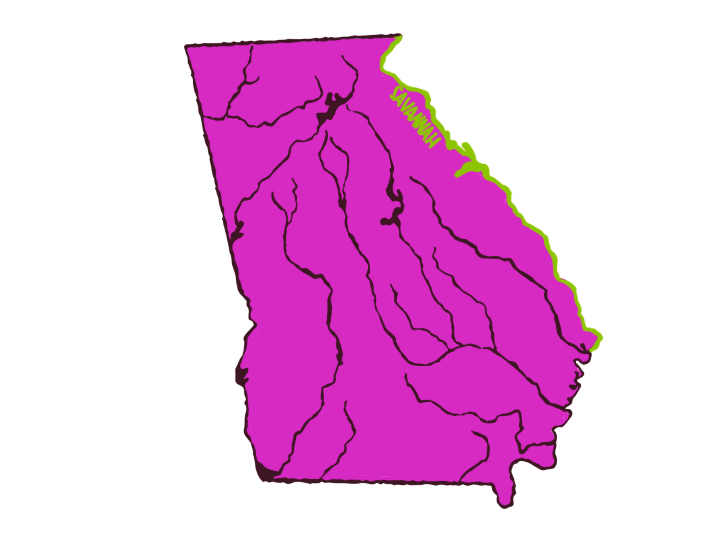
The origins of the Savannah River etymology are greatly debated. However, the word savannah means "grassland" in English and derives from the Spanish word sabana which translates to "flat country." 

St. Marys River

St. Marys River

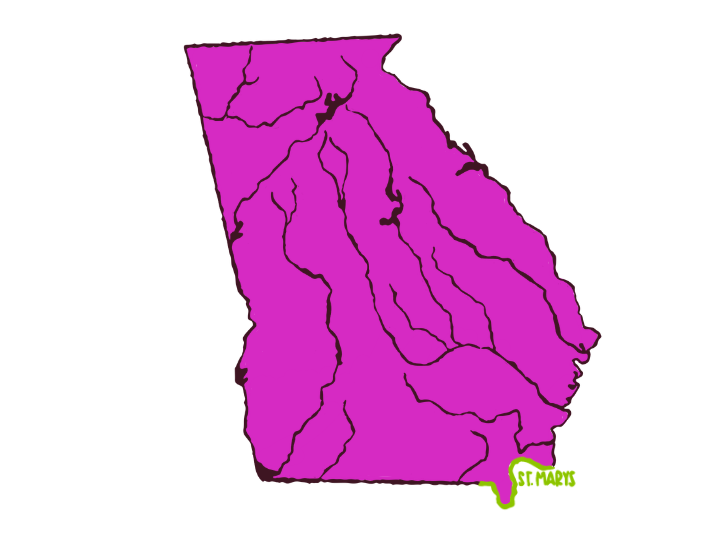
The Timucuan tribe were some of the first occupants of the river basin and knew the river as Thlathlothlaguphka or Phlaphlagaphgaw which translates to "rotten fish." Upon finding the river in 1562, French colonizer Jean Ribault named it the Seine, for its similarities to the River Seine in France. The change from its name given by Ribault into its current name is debated. However, the name St. Marys originated from a seventeenth Spanish mission Santa Maria. Following its abandonment by the Spanish, the coast was resettled by English colonizers who likely established the English version of its name as we know it today, the St. Marys River. 

Suwannee River

Suwannee River

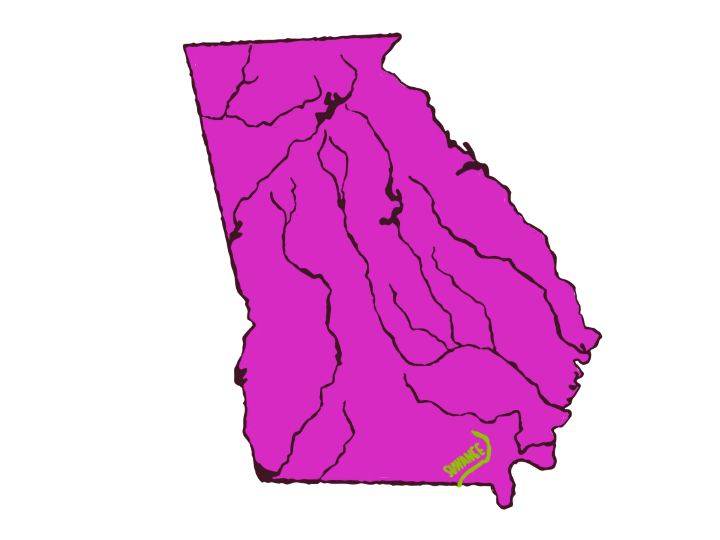
The Suwannee River etymology is debated but comes from Timucuan or another related Indigenous Floridian language. One view claims that the Timucuan word Suwani means "Echo River" or "Muddy Waters," and is the origin of its name. Other sources say Suwannee means "River of Reeds," "Deep Water," or "Crooked Black Water," for the black appearance of the water from tannins. Some even say that the river was named Rio San Juan de Guacara during a Spanish mission which translates to "River of Saint John of Antiquity" a reference to John the Apostle and was mispronounced and corrupted overtime. 

Tallapoosa River

Tallapoosa River

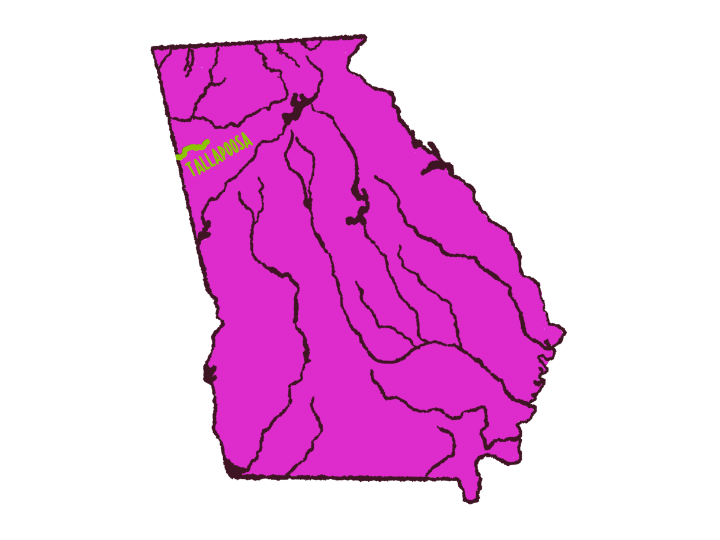
The Tallapoosa are considered the oldest branch of the Muscogee Tribe and originally named the river Talwa Posa which means "grandmother town," a reference to the groups' age. 

Tennessee River

Tennessee River

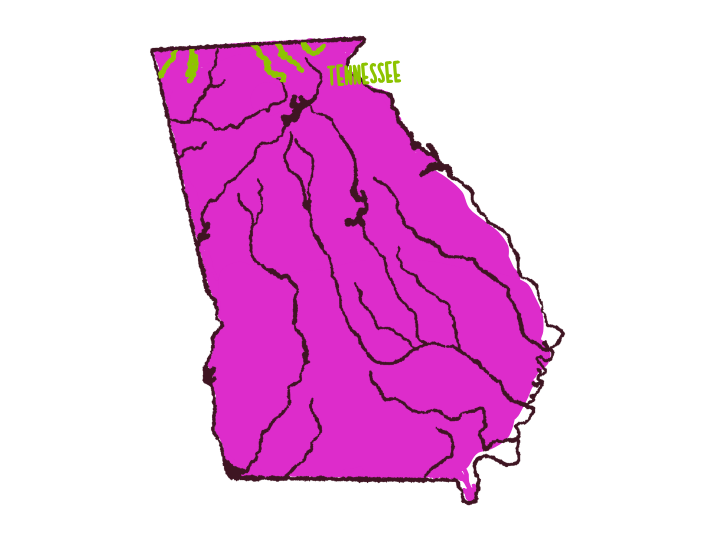
Modern Cherokee literature refers to the river as the Aniyvwiya, which translates to "Principle People." Though the Cherokee village Tanasi holds a historically significant association for its name. Some theories suggest it means "meeting place" where others claim it means "winding river," but a definitive translation remains elusive. 

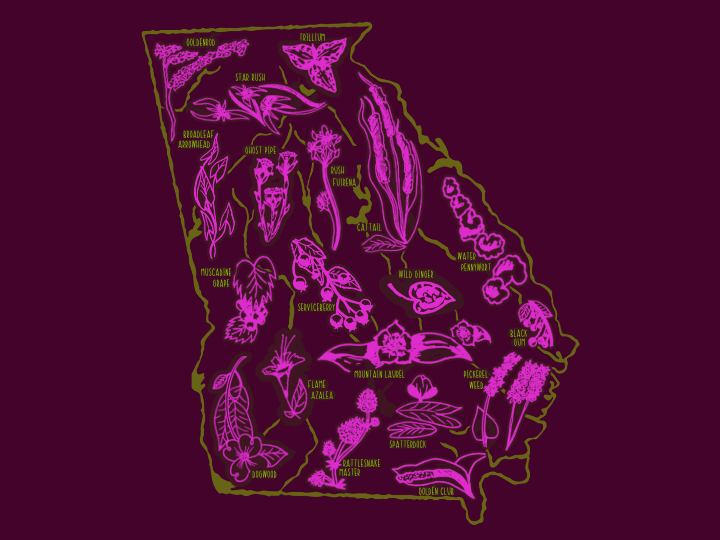
Native Plants in Georgia

Native Georgia Plant Map

Indigenous tribes in Georgia relied heavily on native flora for survival, utilizing plants for food, medicine, tools, weapons, and sacred cultural practices. Because native vegetation depends on clean, reliable water sources to thrive, Georgia’s vibrant waterways were essential to sustaining both the plant life and the tribal communities that depended on it. Together, native plants and rivers formed the bedrock of daily life and spiritual practice. The following descriptions highlight how Native peoples across Georgia and the nation utilized these vital plant species, compiled using reputable resources linked below.


Examining Native Plant Usage by Georgia Tribes

Black Gum

Black Gum

Blank gum (Nyssa sylvatica) is a native Georgia tree that grows across the entire state. Known to the Cherokee as Black Tupelo, various parts of the tree were used in medicinal treatments. Oftentimes, the bark was extracted to use for treating parasitic worms, as an emetic, brewed into bathwater for pulmonary tuberculosis, or even applied to gunshot wounds. 

Broadleaf Arrowhead

Broadleaf Arrowhead

Broadleaf Arrowhead (Sagittaria latifolia), also known as Duck Potato, is an aquatic plant primarily found in marshes, swampy bogs, and shallow wetlands. The plant produces edible tubers that protrude from its roots, extensively consumed by Indigenous Peoples across the nation.

Cattail

Cattail

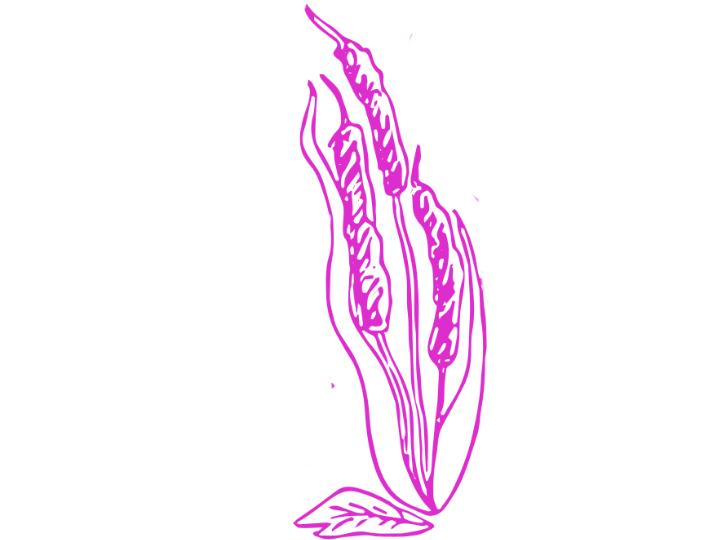
Cattails (Typha latifolia) are aquatic or semi-aquatic perennial marsh plants typically found in the brackish waters of the south. Because of their year-round survival, cattail was often used for consumption at various stages of its life. Shoots found at the base of the leaf clusters were often eaten raw and the immature flower heads were boiled and steamed before consumption. The roots survived off starches in winter months, which were ground up and used as a flour or as a thickener for soups and broths. Medicinally, cattail pollen was used for its hemostatic and astringent abilities. 

Dogwood

Dogwood

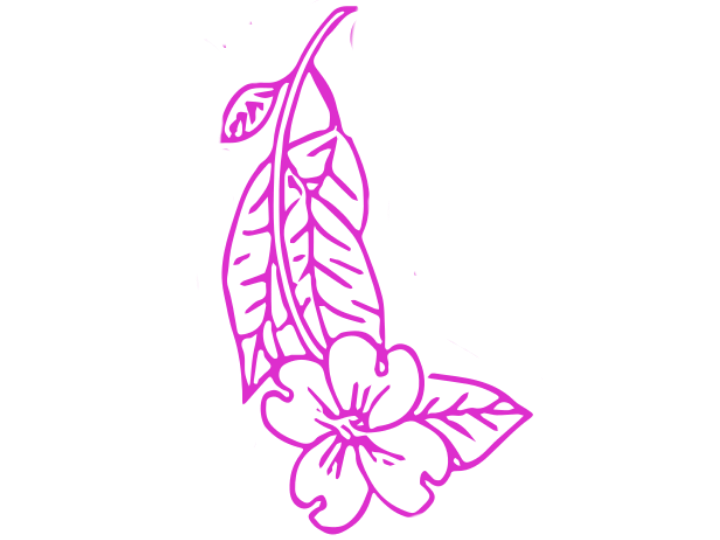
The Georgia native Dogwood tree (Cornus florida) is a flowering perennial deciduous tree found across the contiguous United States. Its bark was dried and ground for use in treating fevers and malaria for its antiseptic abilities. The bark and branches were used similarly to a modern-day toothbrush and is said to have teeth whitening properties. Some tribes may have used the roots as dye to color quills and feathers. Because of its shock-resistant and rough exterior, the bark may have been used in making weaving-shuttles, small pulleys, mallet heads, and jewelers blocks. 

Duck Potato

Duck Potato

Duck Potato (Sagittaria latifolia), also known as Broadleaf Arrowhead, is an aquatic plant primarily found in marshes, swampy bogs, and shallow wetlands. The plant produces edible tubers the protrude from its roots, extensively consumed by Indigenous Peoples across the nation.

Flame Azalea

Flame Azalea

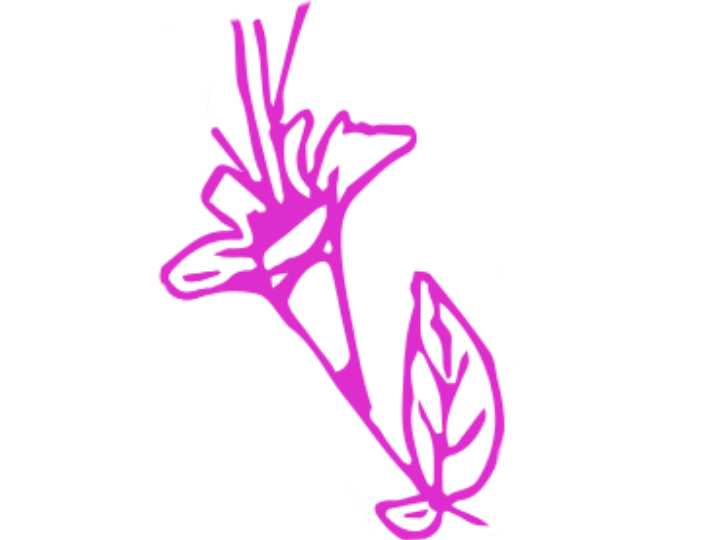
Flame Azalea (Rhododendron calendulaceum) is a native deciduous shrub that produces funnel-shaped flowers in shades of red, orange, and yellow. Medicinally, the twigs were peeled, boiled, and rubbed on rheumatism due to its antirheumatic properties. It also may have been infused by women as a gynecological aid. 

Ghost Pipe

Ghost Pipe

Ghost Pipe (Monotropa uniflora) is a perennial flowering plant found in the dark temperate forests of Georgia. Many Indigenous groups in North America used this plant for medicinal purposes. The Cherokee were known to ingest the roots to mitigate epilepsy in children. They also would rub the plant into bunions and warts, or extract liquid from the plant to treat eye conditions. Made into a tincture or tea, Ghost Pipe was ingested for pain management or tooth afflictions. 

Golden Club

Golden Club

Golden Club (Orontium aquaticum) is a native aquatic perennial wildflower found in the marshy habitats of Georgia. The roots of a Golden Club could be ground into flour and used for consumption. 

Golden Rod

Golden Rod

Goldenrod (Solidago) thrives in the Georgia climate and has over 30 species of perennial flowering plants across the state. The healing abilities and medicinal properties have been used for wound healing, mouth and throat inflammation, and treating tuberculosis, diabetes, and arthritis. Its leaves were used as a poultice for bee stings and were often brewed as tea to reduce fevers. 

Mountain Laurel

Mountain Laurel

Mountain Laurel (Kalmia latifolia) is a native broadleaf evergreen shrub with cup-shaped pink and white flowers that bloom in clusters in late spring. Its heavy but brittle wood was used in manufacturing pipes, wreaths, furniture, utensils, and a variety of household products in native cultures. 

Muscadine Grape

Muscadine Grape

Muscadine (Vitis rotundifolia) is a climbing vine native to the southeast and beloved for its sweet fruits. The fruit of Muscadine, grapes, were historically used as both food and to make wine. Oftentimes, the fruit was sun-dried and preserved as raisins to be eaten during long winters. During the summer, grape skins were more commonly consumed. Muscadines also were valued for medicinal properties. The bark and leaves were used for brewing teas and creating poultices to treat a variety of illnesses. 

Pickerelweed

Pickerelweed

Pickerelweed (Pontederia cordata) is a flowering aquatic perennial plant native to the Americas. The leaves and fruit seeds were consumed raw or ground into flour. Medicinally, Pickerelweed was used as a contraceptive. 

Rattlesnake Master

Rattlesnake Master

Rattlesnake Master (Eryngium yuccifolium) is a perennial flowering plant in the carrot family and is native to North America. Its fibrous leaves were used in weaving practices to make sandals, baskets, and various other objects. Its sap and roots were used as a diuretic and to treat snake bites. 

Rush Fuirena

Rush Fuirena

Rush Fuirena (Fuirena scirpoidea) is a perennial, grass-like plant that can be found growing at the edge of lakes, ponds, and moist meadows. Its stems were used for weaving and cordage. 

Serviceberry

Serviceberry

Serviceberry (Amelanchier) is a group of shrubs or small deciduous trees with blooms of white flowers. Tribes used Serviceberry in a variety of foods like jams, pies, and ciders. Its berries were eaten and the leaves were often made into a general tonic tea. 

Spatterdock

Spatterdock

Spatterdock (Nuphar) is a native perennial aquatic plant with large heart-shaped leaves and blooms of yellow globe-shaped flowers. Spatterdock was used both medicinally and as a food source. Its roots were used as flower and, along with its leaves, were used for dyeing and tanning various objects. 

Starrush

Starrush

Starrush (Rhynchospora colorate) is a native perennial grass-like plant with star-shaped white and green bracts that look like petals. It thrives in the wet soils, shallow waters, and boggy areas of Georgia lands. Its stems were used by tribes for weaving and cordage purposes. 

Trillium

Trillium

Also known as Birthroot, Trillium is a woodland perennial native to North America with three leaves, three petals, and three sepals. Its underground rootstalks were often gathered and chewed for various medicinal purposes. The roots were also brewed into teas that acted as a poultice, an astringent, and a coagulant. Because of its antiseptic properties, it was used in various treatments like rheumatism, hormone regulation, diabetes, tumors, boils, ulcers, and more. 

Water Pennywort

Water Pennywort

Water pennyworts (Hydrocotyle) are semi-aquatic perennial plants that grow along moist soils or form floating masses near waterways. The herb was used as a laxative, emetic, and a diuretic in North American tribes. The greens were eaten or brewed into tea for use as a stomach tonic.  

Water Spider Orchid

Water Spider Orchid

Water Spider Orchids (Habenaria repens) are a native perennial orchid that grows as a semi-aquatic or fully aquatic plant. It grows in masses and forms mats in waterways across North Amera. Because of its mild toxicity, this plant has very little traditional usage, though some claim it may have been used medicinally.

Wild Ginger

Wild Ginger

Wild Ginger (Asarum canadense) is a native low-growing plant typically found in the shades of the eastern United States woodlands. Wild Ginger was used in medicine, ceremonies, and as a spice for various meals. Its functions include facilitating digestion, preventing fevers, calming menstrual cramps, and serving as an antimicrobial and antibacterial poultice.